Thursday, 16 June 2011

The Fox and the Hound

I watched The Fox and the Hound yesterday and it is one of my favourites. I watched it as a child and it is what made me love foxes! I even wanted a pet fox after watching it and used to look out my window at night hoping to see a fox that could be my very own Tod... I was young.
My favourite scenes have to be when Tod and Copper are playing hid and seak and the bear attack scene. They are both so wonderfully animated and emotional scenes.

Well, when it finished I was all excited about it again and decided to look up some stuff about it and find stuff from it so have a look below to see what I found, some really inspiring stuff :) Also look at the post above called '1981 Disney Animation Special! - The Illusion of Life' to see some behind the scenes of the making of the movie.

Facts about The Fox and the Hound
  • It was made in 1981 and was re-released in 1988.
  • It is based on the 1967 novel 'The Fox and the Hound' by Daniel P. Mannix.
  • The 24th film in the Walt Disney Animated Classics series.
  • It was the first animated film to use Dolby Sound.
  • It was the last Disney film that Frank Thomas and Ollie Johnston worked on.
  • Production was delayed when Don Bluth started his own studio and hired away animators.
  • The fight sequence with the bear was originally going to be animated in charcoal!
  • The co-director was used as a model for Amos Slade, the hunter.
  • Approximately 360,000 drawings, 110,000 painted cels and 1,100 painted backgrounds were used to make the finished film.
  • A total of 180 people, including 24 animators, worked on the film.
  • It was the last Disney animated film to end with a “The End” card.
  • Tim Burton was one of the animators on this movie and the Black Cauldron. Although his work was never used.
  • In the original screenplay, Chief was slated to die the same as in the novel, but Art Stevens (one of the Producers) did not want to have an on-screen death and modified the film so that he survived.


Click on an image to see a larger (original) version.


Monday, 13 June 2011

The 12 Principles of Animation

The best place to find out about them is in the book, The Illusion of Life: Disney Animation by Frank Thomas and Ollie Johnstone but below I have given brief descriptions of what each means.


Squash and Stretch
This action gives the illusion of weight and volume as a character moves. The best example of this is with a ball.

Anticipation
This movement prepares the viewer for major action that the character is about to do. You do it in real life. Think about how you jump. Do you just do it or do you bend your legs and swing your arms back in anticipation for the jump?

Staging
This is where you use props, characters and camera angles to help tell the story, direct the eye and create a feeling for the scene. For example, here Woody and Jessie are either side of Buzz creating a triangle that points down to Buzz as he is the main focus of this scene but the triangle falls towards Woody creating an uncomfortable space to show Woody’s feeling at this moment.
Straight-ahead and Pose-to-Pose animation
Straight ahead is used for actions where spontaneity is important. Pose to Pose animation you plan out your animation using poses. The best way to do this is by drawing thumbnails to work out your scene.

Follow through and overlapping action
When an object or character comes to a stand still you get a follow through and overlapping action. For example if a character stops running their hair will go slightly go further than the character.

Slow-out and Slow-in

This softens the action. Making it more lifelike. A good way of doing this is by making sure no movement is totally linear in the graph editor, that way you will avoid a robotic look.

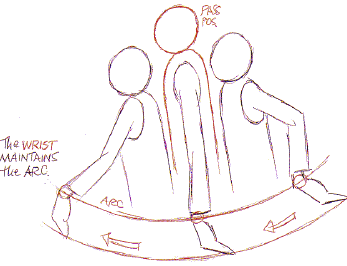
Arcs
Most actions follow an arc or circular pattern rather than being constrained to one axis. Arcs make actions more natural action and helps disguise inbetweening that 3D software makes.

Secondary Action
This is to add more believability. It basically reinforces the main action. An example of this is when a cat is walking it might be swaying its tail or twitching its ear. If you look at a real cat it won’t just be walking it will be doing other stuff with its body too.

Timing
An important piece as if timing is wrong the whole thing will look wrong. To get better at this, watch reference footage and repeatedly playblast and watch your animation to make sure your getting it right. Also, get views from other people, they may spot a flaw in the timing that you may not.

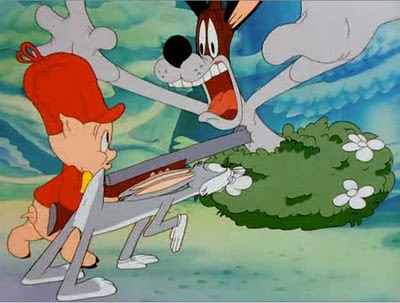
Exaggeration
One of my favourite as I grew up around cartoons such as Tom & Jerry and the Looney Tunes, where they sometimes really exaggerate their characters actions. Sometimes exaggeration is necessary though but not always and you shouldn’t really over exaggerate as things can get silly… well unless that's what your after ;)

Solid Drawing
Are interesting with well-proportioned shapes and a good sense of weight and volume. Apply these characteristics to 3D models and poses.

Appeal
This is the visual quality that makes a character or object attractive, interesting or inspiring. Don’t just think cute or beautiful though, this can be applied to monsters and villains.


The best website I can recommend for finding out more about the 12 principles is the website for the guys who came up with it! Frank and Ollie so check out this link - www.frankanollie.com/PhysicalAnimation.html